Inventory Quality
Avoiding unnecessarily broad blocklists
Audit domains, apps, channels, categories and keywords so brand suitability exclusions match the reason for each rule.

Desk
Looks at how campaign results are counted and where measurement breaks down.
Inventory Quality
Audit domains, apps, channels, categories and keywords so brand suitability exclusions match the reason for each rule.
Measurement
Judge whether inventory-segment delivery and outcomes can support a budget decision while keeping small samples and buying differences visible.
Measurement
Compare post-click and post-view conversions using consistent events, windows and attribution rules, and understand what the split cannot prove.
Measurement
Identify an inconclusive programmatic test using setup validity, outcome counts, uncertainty and the decision it was meant to support.
Measurement
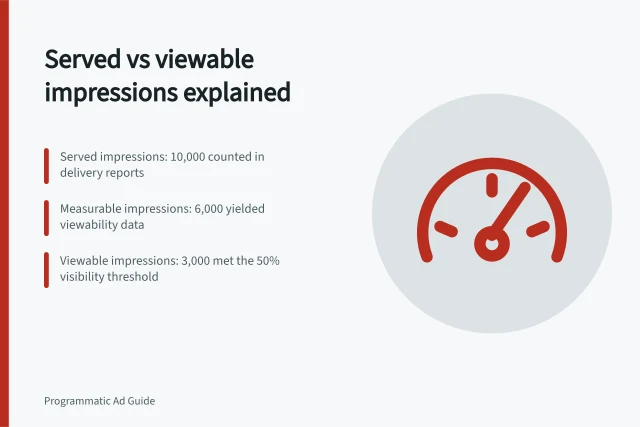
See how served, eligible, measurable and viewable impressions differ, which denominator each Active View rate uses, and what remains unknown.
Measurement
Use campaign-level deduplicated reach, understand overlap across report rows, and state identity, reporting-window and modelling limits.
Inventory Quality
Cheap impressions are low value when they consume budget without useful exposure or subsequent action.
Measurement
Compare conversion periods at equal maturity and keep recent results provisional before changing programmatic bids or budgets.
Measurement
Reconcile planned and delivered programmatic reach by checking scope, bought impressions, frequency and reporting limits.
Inventory Quality
When traffic quality changes suddenly, find the point at which the pattern broke before changing exclusions.
Measurement
Test an optional placement exclusion and measure its whole-buy effect on delivery, spend, outcomes and replacement inventory.
Inventory Quality
Turn brand requirements into programmatic buying controls, review classification limits and document campaign exceptions.
Campaign Audits
Compare a programmatic campaign with its brief, buying settings, delivery and outcomes, then assign decisions for material findings.
Measurement
Measure programmatic delivery, viewability, deduplicated reach and attributed conversions against the campaign outcome, with each metric's limits clear.
Measurement
Define conversion events, check implementation and counting rules, and interpret attributed DSP results alongside business records.
Inventory Quality
Inventory quality is the fit between where an ad appears and what the campaign needs to achieve.
Measurement
Reading reach and frequency together: practical checks and decisions for this workflow.
Measurement
Align events, periods, attribution rules and report metrics before explaining gaps between DSP and first-party results.
Campaign Audits
Log a trader's reason, saved setting and baseline, then review delivery and mature outcomes without claiming false causality.
Measurement
Specify the campaign exports, cost definitions, change log and access needed to review an agency-managed programmatic buy.
Campaign Audits
Review agency-managed delivery, settings, changes and costs using a defined evidence pack when DSP access is restricted.
Inventory Quality
Check category definitions, representative content, classification scope and timing before applying a contextual block.
Inventory Quality
A placement report is useful when every important row can be tied to a decision.
Measurement
Use transaction IDs, order status, event paths and counting methods to distinguish repeated records from genuine new purchases.
Measurement
Check the completion journey, event payload, platform receipt and reporting after a DSP conversion tag changes.
Campaign Audits
Turn campaign results, setting changes and unresolved findings into a concise post-mortem with owners and closure checks.